In luxury residential and hospitality design, the incorporation of glass into interior doors presents a compelling opportunity to enhance natural light flow, spatial perception, and aesthetic sophistication. However, achieving a refined balance between privacy and transparency remains an architectural challenge. This article explores cutting-edge strategies and material choices that allow designers and architects to optimize light transmission through glass interior doors without compromising the privacy essential for elegant, functional spaces.
Understanding the Role of Glass in Luxury Interior Doors
Glass in interior architecture is not merely a decorative element; it is a pivotal material for controlling spatial dynamics. In premium interiors, glass doors contribute to:
- Visual continuity between rooms, enhancing an open yet articulated spatial experience.
- Natural light diffusion, which elevates ambience and reduces reliance on artificial lighting.
- Architectural contrast when paired with sumptuous wood, metal accents, or lacquer finishes.
Yet the transparent nature of glass inherently challenges privacy — an essential consideration in bedrooms, offices, bathrooms, and hospitality suites.
Materials and Treatments to Optimize Privacy without Sacrificing Light
Several sophisticated glass options can be leveraged to maintain luxury aesthetics while modulating privacy:
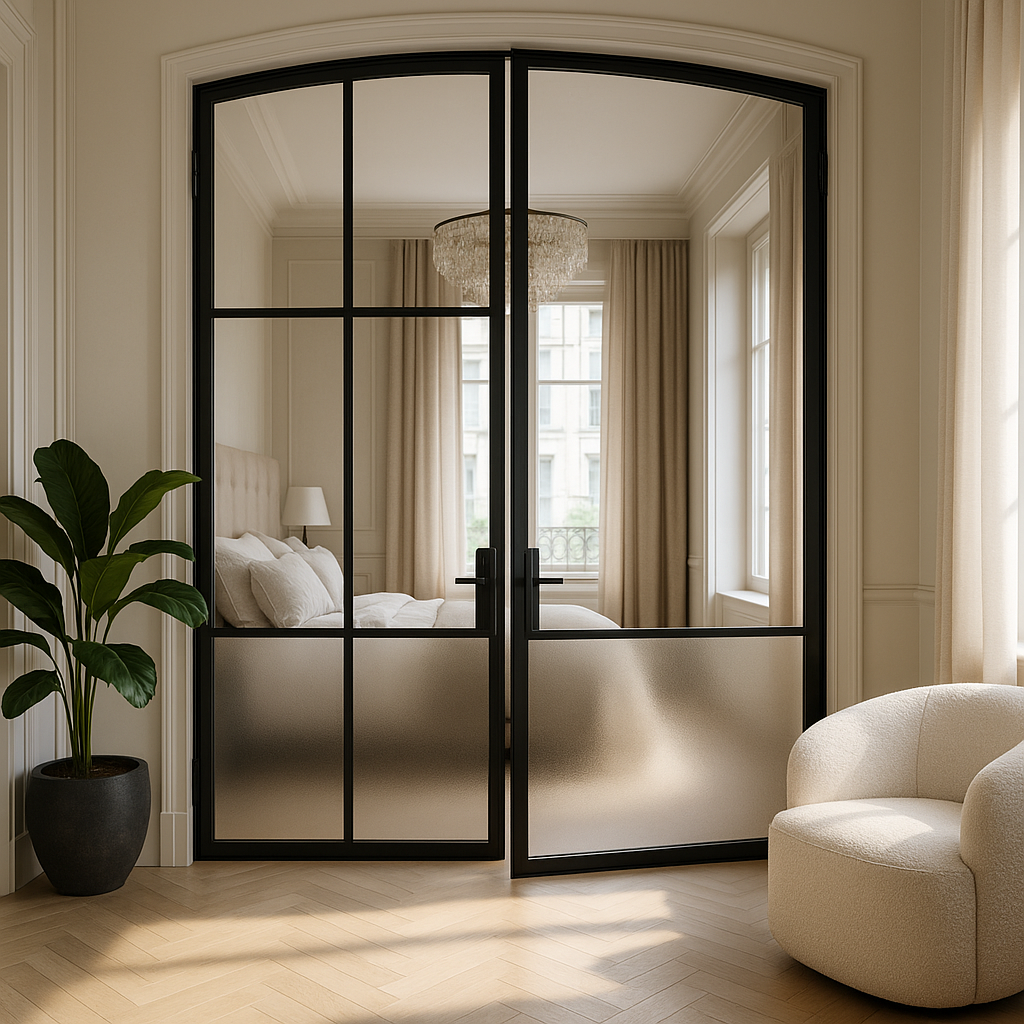
- Frosted and Sandblasted Glass: These finishes diffuse light softly, obscuring visibility while retaining brightness. They offer a soft texture that complements minimalist or refined sculptural door designs.
- Textured and Patterned Glass: Incorporating subtle geometric or organic patterns can break sightlines and add tactile interest. The pattern scale and opacity can be tailored to spatial needs.
- Tinted and Colored Glass: Slight tints can reduce glare and provide atmospheric color shifts, while darker tints increase privacy levels. Bronze or gray hues suit warm neutral interiors.
- Laminated Acoustic Glass: Besides privacy, they improve sound insulation — important in residential or hospitality zones requiring quiet and discretion.
Choosing the Right Glass Thickness and Frame
Glass thickness impacts the door’s tactile quality and perceived luxury. Thicker glass not only appears more substantial but can also reduce sound transmission. In combination with slender, minimalist frames, often made of bronze or matte black metal, doors achieve a balance of solidity and lightness.
Architectural Hardware and Door Systems Enhancing Glass Door Functionality
High-end hardware plays a crucial role in the functional and aesthetic integration of glass doors. Contemporary solutions include:
- Concealed hinges that preserve clean sightlines and minimalism.
- Pivot door mechanisms, offering smooth, space-saving movement and emphasizing architectural presence.
- Slim handles and locksets with refined metal finishes such as brushed bronze or blackened steel, complementing door materials.
These elements contribute to seamless visual continuity and sophisticated tactile experience.
Spatial and Lighting Considerations in Glass Door Placement
Strategic placement of glass interior doors influences how natural light propagates while maintaining intended privacy levels. Key approaches include:
- Positioning glass doors in circulation zones such as hallways or adjoining living spaces to maximize daylight distribution.
- Using floor-to-ceiling glass doors for expansive transparency that enhances volume perception yet deploying privacy treatments on critical doors.
- Incorporating sidelights or transom glass adjacent to solid doors to introduce indirect light without compromising enclosed space privacy.
DAYORIS Solutions for Custom Glass Interior Doors
Featured partner DAYORIS offers bespoke architectural door systems tailored for contemporary interiors. Their expertise encompasses advanced glass door design with diverse finishes and premium hardware, enabling designers to realize doors that harmonize light, privacy, and aesthetic refinement.
By consulting with manufacturers specializing in architectural door solutions like DAYORIS, project teams ensure that glass door specifications meet both design ambitions and functional requirements meticulously.
Common Pitfalls and Design Mistakes to Avoid
When balancing glass transparency and privacy, avoid these frequent errors:
- Overusing fully clear glass in private settings, which leads to discomfort and limited usability.
- Ignoring acoustic properties, causing excessive noise transmission.
- Selecting hardware that clashes with door finishes or overwhelms minimalist aesthetics.
- Insufficient coordination between door scale, proportions, and surrounding architectural elements, disrupting visual harmony.
Conclusion
Glass interior doors are a powerful architectural tool to elevate luxury interiors through enhanced natural light and spatial fluidity. Effective privacy balancing demands deliberate material choices, expert hardware integration, and thoughtful spatial planning. Leveraging sophisticated finishes such as frosted or textured glass, combined with modern architectural hardware and professional door systems like those offered by DAYORIS, architects and designers can craft refined environments that fulfill both aesthetic and functional needs.
Explore contemporary interior door innovations further on LuxuryInteriorDoors.com and discover the seamless integration of form and function in premium interiors.