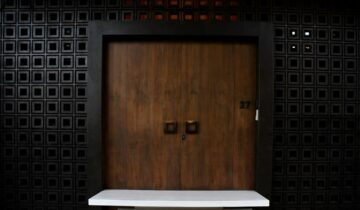
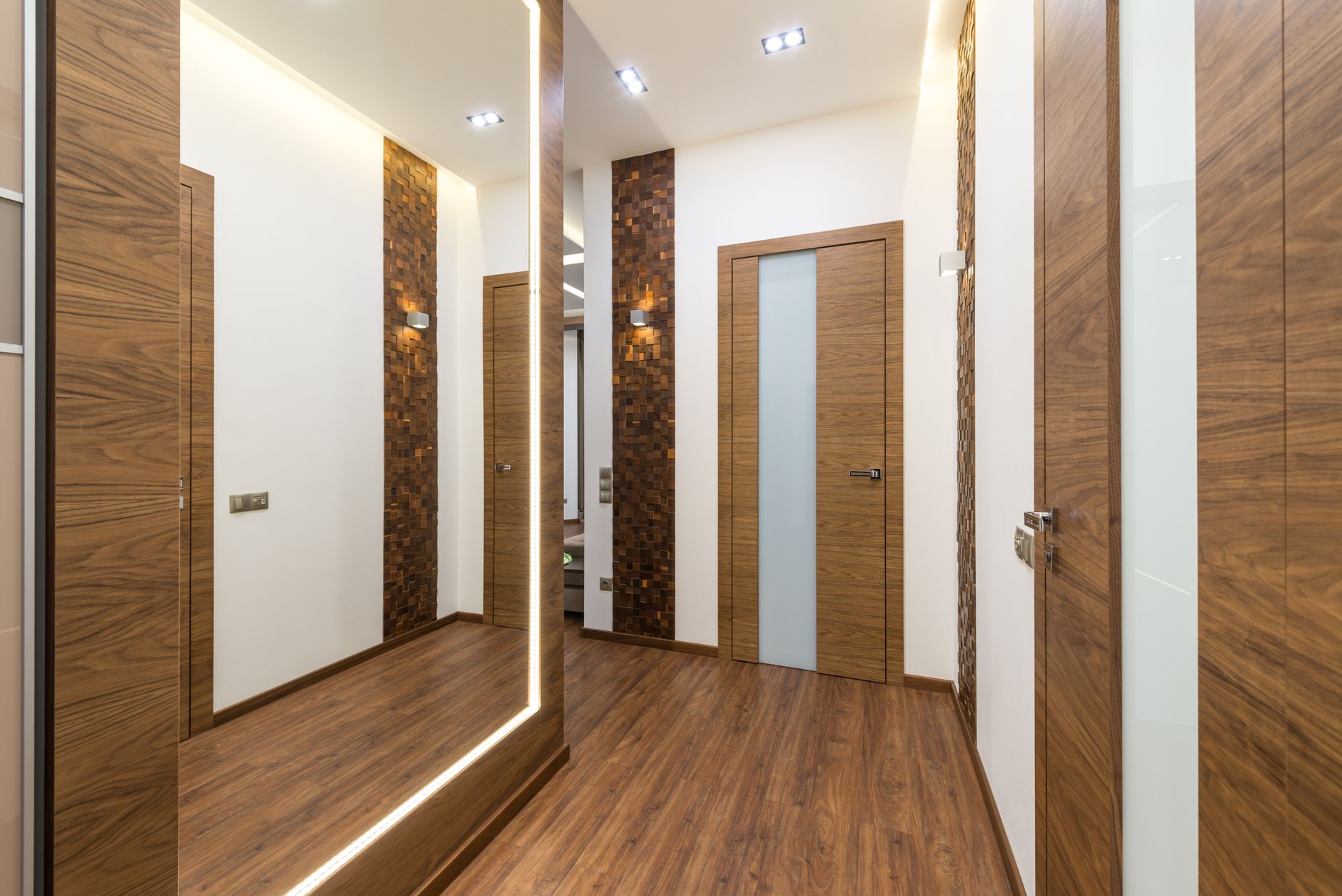
In warm minimalist interiors, the most successful doors are rarely the loudest element in the room. They work because they belong to the larger material composition. If you are trying to match interior door finishes to plaster, oak, and stone, the challenge is not finding a perfect one-to-one match. It is creating a visual rhythm where the door feels intentional, proportioned, and architecturally integrated.
That question comes up often in luxury homes, where walls may be finished in lime plaster, flooring in pale oak or travertine, and millwork in a slightly different tone altogether. The door has to negotiate those surfaces without competing with them. The result should feel calm, not coordinated in an obvious or decorative way.
How to match interior door finishes to plaster, oak, and stone
The best starting point is to identify which material is supposed to lead the room. In some interiors, plaster is the quiet backdrop and the door should disappear into it. In others, oak cabinetry or stone flooring establishes the palette, and the door becomes a supporting layer. Once that hierarchy is clear, the finish decision becomes much easier.
A useful rule is this: match undertones before you match color. A warm plaster wall, for example, will usually feel more cohesive with a soft ivory lacquer, a muted sand tone, or a wood veneer with a similar warmth than with a crisp blue-white finish. The same is true for oak and stone; subtle tonal alignment matters more than exact duplication.
When plaster is the dominant surface
Plaster walls create depth because they reflect light softly and often carry a slightly irregular, tactile surface. A door that is too glossy or too stark can break that softness. Matte painted finishes, low-sheen lacquer, and concealed-frame systems usually support the architecture best because they allow the wall plane to read as continuous.
If the goal is visual quiet, consider a door color that sits just off the wall tone rather than matching it mechanically. That slight shift can make the composition richer while still preserving restraint. For a more integrated approach, DAYORIS custom interior door applications can offer useful inspiration for how a door can disappear into a pared-back architectural envelope.
When oak brings warmth and grain
Oak introduces texture, and texture changes how a finish reads. A painted door next to oak trim can feel crisp and contemporary, but only if the two surfaces are balanced by proportion and light. In many luxury interiors, the more natural choice is a wood veneer or a finish that echoes the undertone of the oak without trying to mimic the grain too closely.
That distinction matters. Matching wood to wood is most effective when the tones are related but not identical, especially in open-plan layouts where every surface is visible at once. A lighter oak door can feel fresh beside travertine and plaster, while a deeper walnut finish can add contrast in rooms that need more visual weight. The key is to let one material lead and the others support it.
When stone sets the tone
Stone often brings a more grounded, architectural presence than plaster or wood. It may appear in floors, fireplaces, or feature walls, and it tends to make nearby finishes feel either more refined or more abrupt. A stone-heavy space usually benefits from a door finish that softens the composition rather than competing with it.
That may mean a warm wood veneer against cool stone, or a painted finish that visually recedes while allowing the stone to remain the focal point. If the stone has strong veining or noticeable tonal variation, a quieter door finish helps keep the room from feeling overdesigned. In that setting, the door should act like a framing element, not a second statement surface.
Choose a finish that supports the architecture
Not every door finish sends the same message. Painted doors suggest continuity and restraint. Veneered doors add warmth, especially in interiors where natural materials define the atmosphere. Lacquered surfaces introduce a cleaner, more reflective reading, which can be useful in contemporary spaces with sharper lines. Metal accents, used sparingly, can reinforce a more tailored architectural language.
The most refined interiors usually limit the number of competing finishes. If the room already combines plaster, oak, and stone, a door should clarify the composition, not add another texture for its own sake. This is where proportion becomes as important as color. A full-height door in a quiet finish can feel more luxurious than a highly detailed door in a busy room because it allows the material palette to breathe.
Light, hardware, and proportion change everything
Natural light can shift a finish dramatically. A door that looks balanced in afternoon sun may feel cooler at night under recessed lighting. That is why samples should always be viewed in the room, against adjacent walls, flooring, and millwork. A warm gray that feels subtle on a sample board can become surprisingly cool beside creamy plaster.
Hardware also affects how the door reads. Slim bronze or dark metal pulls create a quiet punctuation mark, while bright hardware can increase contrast and make the door more visible. In minimalist interiors, concealed hinges and restrained hardware often preserve the architectural line. If you are browsing styles and assemblies, the Luxury Interior Doors catalog is a practical place to compare finishes and configurations in one view.
Common mistakes to avoid
One of the most common mistakes is treating every finish as if it must match exactly. Perfect matches often feel flat, while well-chosen differences create depth. Another misstep is ignoring the undertone of adjoining materials. A door finish that looks elegant on its own may feel disconnected beside pink-beige plaster or honey oak.
It is also easy to underestimate the effect of sheen. High gloss can work in specific modern settings, but in warm, material-rich interiors it can overpower the room. A final issue is scale: a small door in a large, stone-heavy space may need stronger visual presence, while an oversized door in a compact hallway may benefit from a softer finish that reduces contrast.
If you are planning a renovation or new build, think of the door as part of the room’s material choreography. The best finish will not simply match plaster, oak, or stone; it will connect them so the architecture feels deliberate and cohesive. If you want to discuss a project direction, the Luxury Interior Doors contact page is a good next step for design-oriented guidance.