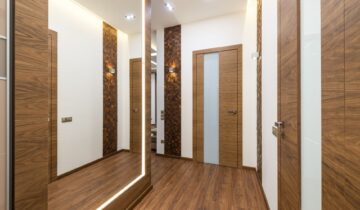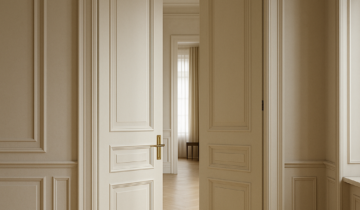
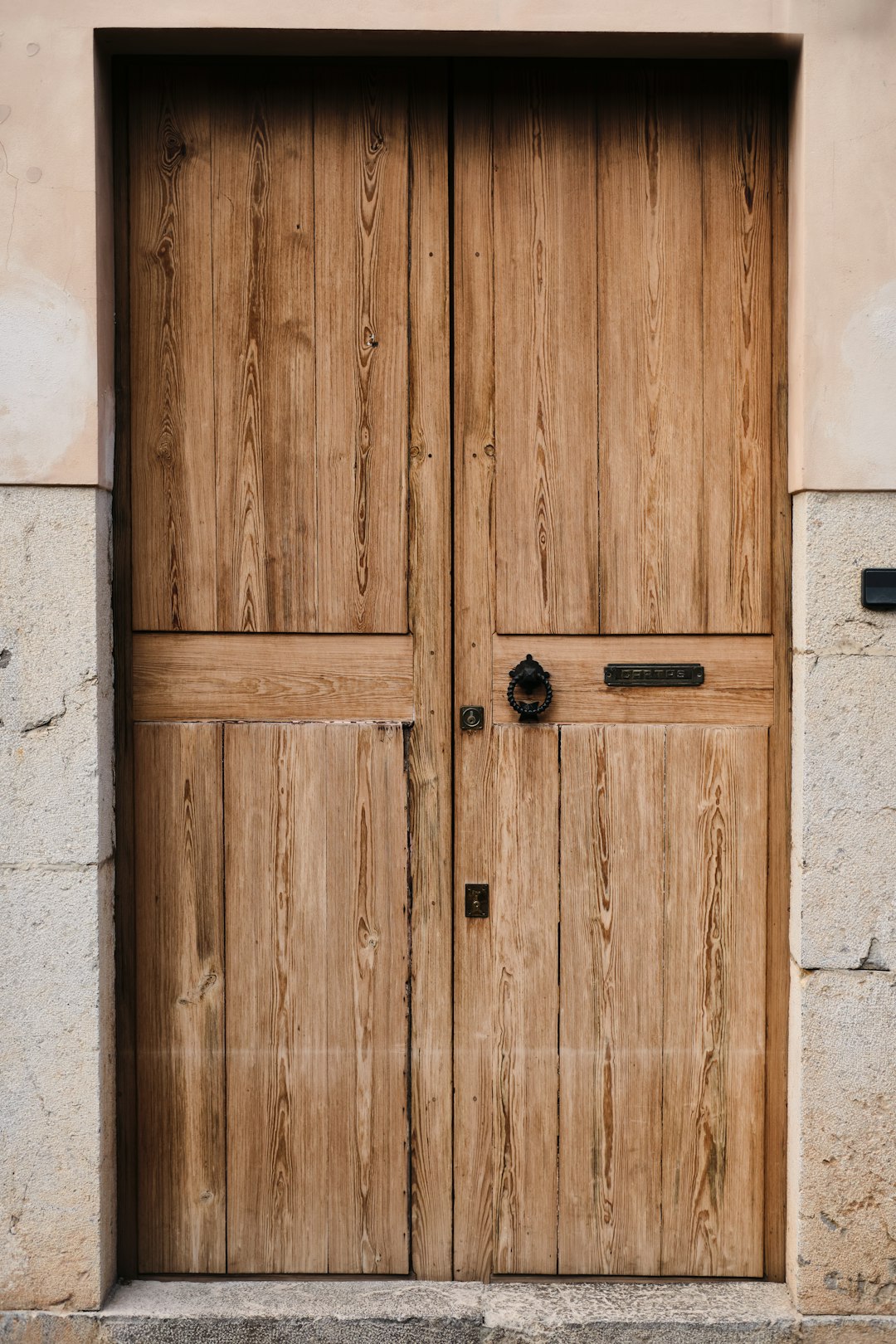
In a warm minimalist interior, the door is never just a boundary. Its finish can soften a corridor, quiet a wall plane, or introduce a restrained material accent that makes the whole room feel more intentional. If you are deciding how to choose interior door finishes for warm minimalist interiors, the right answer usually depends less on trend and more on proportion, light, and how much visual continuity you want between rooms.
Decide whether the door should blend in or stand out subtly
Warm minimalism usually works best when finishes are calm and coordinated. Many projects succeed with one of two strategies: a near-tonal door that almost disappears into the wall, or a softly contrasting material that adds depth without breaking the composition. A flush lacquered door in a warm off-white can quiet a hallway, while oak or walnut veneer can bring texture into an otherwise pared-back room. The key is restraint. In this style, a door should feel deliberate rather than decorative.
Let the room’s light shape the finish
Natural light changes how a finish reads throughout the day. North-facing rooms can make some neutrals feel cooler, so a creamy lacquer or light wood tone may preserve warmth. South- and west-facing spaces often intensify undertones, which can make a pale finish feel brighter and a wood grain feel richer. If the room has strong daylight, ask how the door will look at noon, late afternoon, and evening under artificial lighting. The same finish can look beautifully soft in one condition and overly stark in another.
Matte, satin, or low-sheen?
For most warm minimalist interiors, matte or low-sheen finishes are the most forgiving and the most architectural. They reduce glare, support visual quiet, and allow the shape of the door to read before the surface reflectivity does. Satin can be effective when you want a bit more depth or when the door needs to coordinate with nearby cabinetry or trim. High gloss, by contrast, tends to pull the door out of the minimalist conversation unless the entire space is designed around reflection and contrast.
Coordinate the door with floors, millwork, and hardware
Door finishes should not be chosen in isolation. A warm minimalist room often relies on relationships between the door, the floor, and the fixed millwork. If your flooring is pale oak, a similarly toned door can create a seamless field; if the floor is stone or terrazzo, a wood door can introduce welcome softness. When matching wood species or veneers, pay attention to undertones rather than trying to force an exact match. Slight variation often looks more sophisticated than a rigid pairing.
Hardware deserves the same level of consideration. Brushed bronze, darkened metal, and soft black finishes can all work, but they should feel integrated with the rest of the interior. The most successful compositions treat handles, hinges, and frames as part of the surface language, not as decorative add-ons.
Use texture to create warmth without clutter
Warm minimalism is not about removing all character. It is about selecting a few materials that carry more weight. A light oak veneer can soften a long corridor, while walnut can add richness to a den, office, or primary suite. Painted finishes are often best when the architecture calls for calm continuity, especially in apartments or homes where doors sit within a very restrained wall palette. For projects that lean more architectural, contemporary systems such as DAYORIS custom interior door applications can be a useful reference for achieving a more integrated look.
If you want to see a broader range of styles and surface directions, browse the LuxuryInteriorDoors.com catalog for inspiration across modern and refined interior door solutions, or review the editorial perspective on the LuxuryInteriorDoors.com blog.
Common finish mistakes in warm minimalist interiors
One of the most common mistakes is introducing too many competing wood tones. Another is choosing a door finish that is warmer or cooler than everything around it without a clear reason. A stark white door in a room with creamy walls can feel disconnected, while a dark finish may look heavy if the space depends on lightness and openness. It is also easy to overlook scale: a large door with an expressive grain can dominate a modest room, while a very quiet finish may disappear entirely in a grand interior if the surrounding architecture is too busy.
The safest approach is to test samples in place. Place the door finish next to the wall color, flooring, and millwork, then review it in both daylight and evening light. The goal is not perfect matchiness; it is visual coherence.
If you are planning a renovation or new build, this is a good time to define what the door should do architecturally before choosing a finish. Should it recede into the wall plane, echo the floor, or create a subtle point of contrast? Once that decision is clear, the finish becomes much easier to select, and the entire interior benefits from a calmer, more resolved material palette. If you would like help exploring a door direction that fits your interior, contact LuxuryInteriorDoors.com for the next step.