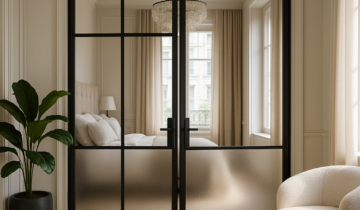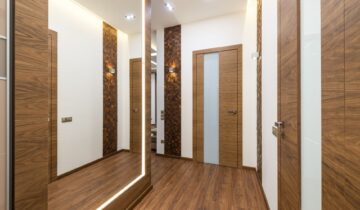
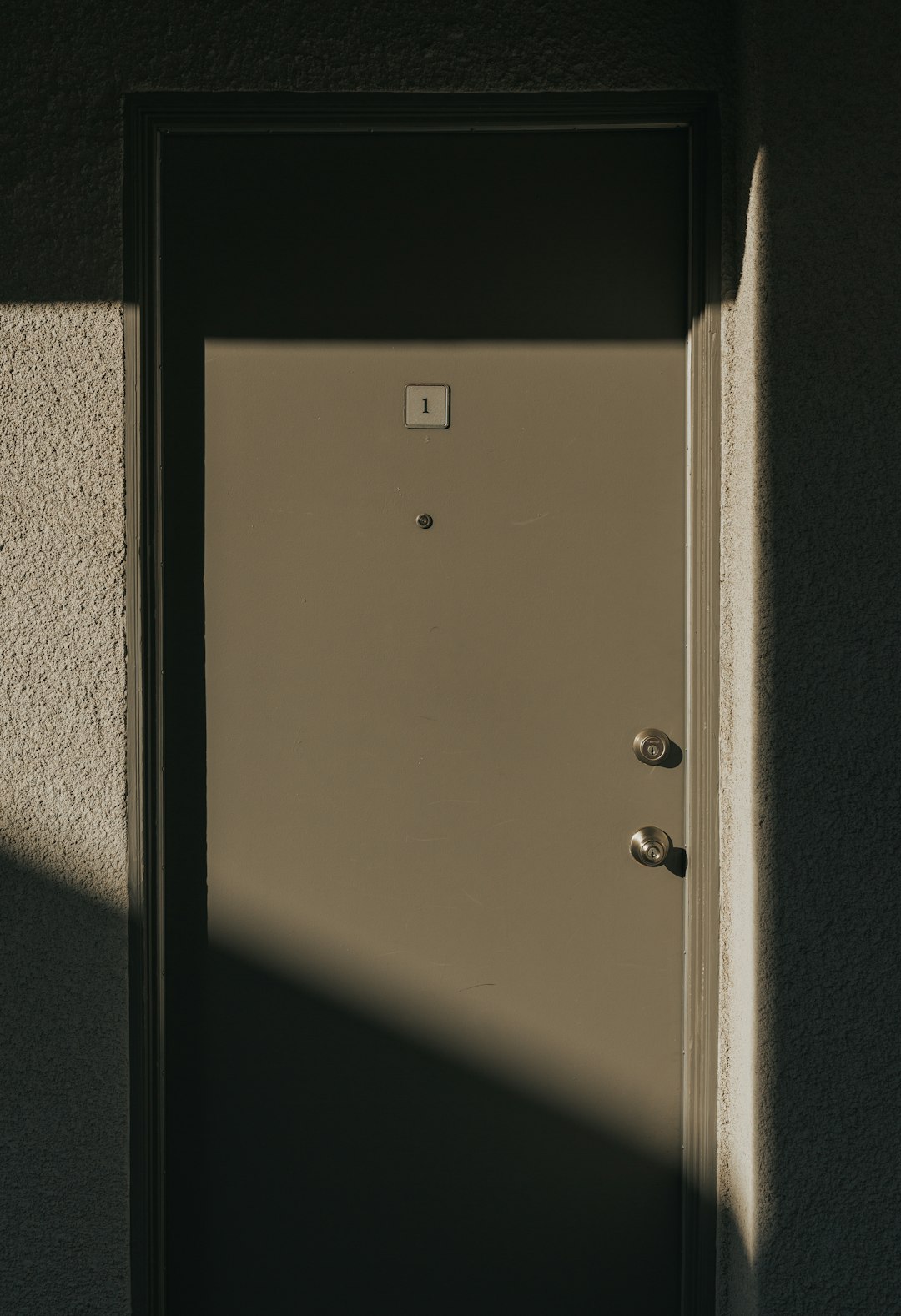
Textured wall finishes can give a room more depth, softness, and architectural character, but they also change the way a door is perceived. If you are trying to find the best door finish for textured walls, the real question is not simply which color looks good next to plaster or limewash. It is how the door surface, sheen, and edge detail work with the wall so the room feels deliberate rather than visually busy.
In luxury interiors, doors are rarely isolated objects. They sit inside a field of materiality: paint, stone, timber, fabric, light, and shadow. When the wall has movement or tactility, the door finish has to decide whether to blend quietly into that backdrop or stand apart as a precise architectural element. That choice shapes how calm, expansive, or layered the room feels.
Why textured walls change the way door finishes read
Flat, smooth walls reflect light evenly, so a door finish can be selected with relative simplicity. Textured walls behave differently. Limewash, Venetian plaster, microcement, and even refined textured paint all create subtle variations across the surface. Those variations catch light at different angles, which means a door finish may look warmer, cooler, darker, or more reflective depending on the time of day.
This is why the best door finish for textured walls is usually one that respects the room’s visual rhythm. A highly reflective finish can compete with the wall texture, while an overly flat finish can disappear in a way that feels unfinished. The goal is balance: enough presence for the door to read as intentional, enough restraint for the wall to remain the dominant surface.
Matte and satin finishes usually feel the most composed
In contemporary interiors, matte and soft satin finishes often pair best with textured walls because they reduce glare and allow the wall treatment to do its work. A matte painted door can feel calm beside limewash or plaster, while a satin lacquer may introduce a subtle lift without creating strong reflections. If the room receives abundant natural light, a lower-sheen finish is especially helpful because it prevents the door from becoming visually loud.
Wood veneers can also be effective, particularly when the grain is restrained and the tone is tuned to the surrounding palette. A warm walnut door, for example, can create depth against mineral walls without overwhelming them. The finish should support the architecture, not compete with it.
Matching versus contrasting: two strong design strategies
There are two reliable approaches when selecting the best door finish for textured walls: tonal matching and intentional contrast. Both can work beautifully, but they create very different spatial effects.
Tonal matching creates visual continuity
Tonal matching is the quieter option. A door finished in a color close to the wall can make circulation spaces feel longer, cleaner, and more serene. This is especially effective in hallways, bedrooms, and private suites where the design intent is calm rather than dramatic. Concealed doors, flush doors, and minimal frames often benefit from this approach because the architecture reads as one continuous plane.
When the wall surface already has texture, tonal matching prevents the room from feeling fragmented. The subtle variation stays in the wall itself, while the door serves as a precise interruption rather than a separate statement.
Contrast can sharpen the architecture
Contrast works when you want the door to become a clear architectural line within the room. A darker oak door against pale plaster, or a lacquered surface against a softly textured wall, can create definition and depth. This approach is useful when the door leads to an important room, frames a long axis, or needs to read as a deliberate design moment.
The key is to make the contrast feel disciplined. If the wall texture is already expressive, a strong finish should be resolved and elegant rather than glossy or decorative. Think in terms of proportion, surface finish, and how the eye moves from one plane to another.
The role of hardware, reveals, and frame detail
Door finish is only part of the composition. Hardware, reveals, and frame depth can either calm the design or make it feel fragmented. A heavily detailed handle on a textured wall can create too many focal points. By contrast, a slim pull, concealed hinge, or pared-back edge can preserve the visual continuity that textured walls often deserve.
In minimalist interiors, the door frame and reveal become especially important. A crisp shadow line can separate the door from the wall in a way that feels architectural rather than ornamental. When the wall has tactile movement, these small thresholds matter more than many people expect.
For readers exploring contemporary architectural door systems, the custom interior door applications from DAYORIS can be a helpful reference point for thinking about how door surfaces integrate with the surrounding wall condition.
A practical checklist before you decide
Before committing to a finish, test the relationship between the door and the wall in the actual room. Lighting changes everything, and a finish that looks balanced in daylight may feel different at night. If you can, look at samples near the flooring, trim, and adjacent millwork so the palette reads as a whole rather than as separate decisions.
- Compare samples in natural light and evening light.
- Decide whether the door should blend in or stand out.
- Keep sheen levels understated if the wall texture is already prominent.
- Coordinate the finish with handles, frames, and nearby cabinetry.
- Use stronger contrast only when the architecture can support it.
It can also help to study broader examples of material coordination and room transition on the Luxury Interior Doors blog, or browse the door catalog to see how different surfaces and profiles behave in contemporary interiors.
Choosing the best door finish for textured walls is ultimately about visual discipline. When the finish respects the wall, the room feels more intentional, the circulation more graceful, and the architecture more complete. A well-chosen door does not fight the texture around it; it helps define the atmosphere that texture was meant to create.