If you have ever walked into a narrow hallway and felt the walls close in, the doors are often part of the reason. In luxury interiors, hallway scale is not only shaped by width and lighting; it is also determined by door proportion, alignment, finish, and how much visual interruption the openings create. Understanding how to make a narrow hallway feel larger with interior doors can help a compact passage read as calm, architectural, and intentional rather than cramped.
The best solutions are rarely dramatic. More often, they rely on subtle decisions: keeping door lines consistent, reducing trim noise, choosing finishes that merge with the wall plane, and treating circulation as a composition. For homeowners, designers, and architects, the goal is not to hide every door. It is to make the hallway feel like part of a continuous interior language.
Why narrow hallways feel smaller than they are
Hallways can feel tighter than other rooms because the eye has limited room to rest. Every projecting casing, contrasting door color, or uneven head height creates a break in the visual rhythm. When several doors line one side of a corridor, those interruptions multiply. Even a hallway with generous width can feel compressed if the openings compete with one another instead of aligning into a single architectural order.
This is why interior doors matter so much in hallway design. They are large vertical elements at eye level, and in a narrow passage they often become the dominant surfaces. The more those surfaces are visually quiet, the more spacious the corridor will feel.
Use door proportions to create a stronger sense of scale
One of the most effective ways to improve hallway proportion is to coordinate the door height, the wall divisions, and the surrounding trim. When door heads align cleanly, the eye reads the hallway as a continuous frame rather than a series of disconnected openings. In longer corridors, that continuity can be more powerful than decorative detail.
Keep the top line consistent
A level, uninterrupted top line across adjacent doors helps establish rhythm. When some doors are set higher, lower, or framed differently, the hallway becomes visually busy. A consistent alignment makes the space feel more deliberate and often more generous.
Favor vertical calm over visual clutter
Tall, simple door surfaces can be especially effective because they reinforce the hallway’s vertical dimension. Even when the doors are not oversized, a clean composition can suggest height and openness. For inspiration, the Luxury Interior Doors catalog is a useful starting point for seeing how different profiles influence spatial perception.
Choose door designs that blend with the wall plane
In narrow circulation spaces, doors that sit quietly within the architecture usually perform better than highly detailed designs. Flush doors, concealed frames, and pared-back profiles reduce the number of shadows and edges the eye has to process. That visual restraint is especially useful in contemporary homes, where the hallway often serves as a transition between public and private zones.
Color matters here as well. A door finished to match the wall can make the corridor feel wider because the boundaries soften. A strong contrast may be appropriate in some interiors, but in a tight hallway it can visually cut the wall into smaller parts. Warm neutral tones, soft oak, matte lacquer, and subtle veneer grains tend to support a more expansive feel than glossy or heavily patterned surfaces.
If you are considering a more seamless result, explore the idea of architectural continuity rather than isolated door style. The best door is often the one that supports the whole wall composition instead of drawing attention to itself.
Let hardware stay refined and understated
Door hardware has a surprisingly large effect in narrow spaces. Bulky handles, shiny finishes, and strongly decorative hinges can create visual noise. In a hallway where every inch counts visually, minimal hardware often works best because it preserves the clarity of the wall surface.
That does not mean hardware should disappear completely. It should be chosen with the same discipline as the door itself. Slim lever handles, discreet pulls, and finishes that relate to adjacent materials can reinforce the sense of order. When the eye moves through the hallway without being interrupted by excessive contrast, the space feels calmer and more refined.
Think about door swing, circulation, and sightlines together
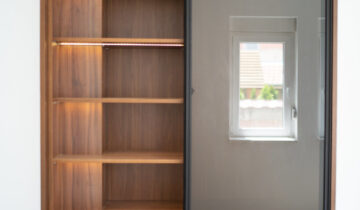
A narrow hallway is not only a visual problem; it is a movement problem. If door swings interfere with circulation, the passage can feel tighter than its actual dimensions suggest. In some homes, pocket or sliding solutions can reduce that congestion, especially for secondary rooms, closets, or storage areas. Those options are not automatically the right answer, but they are worth considering when circulation is limited.
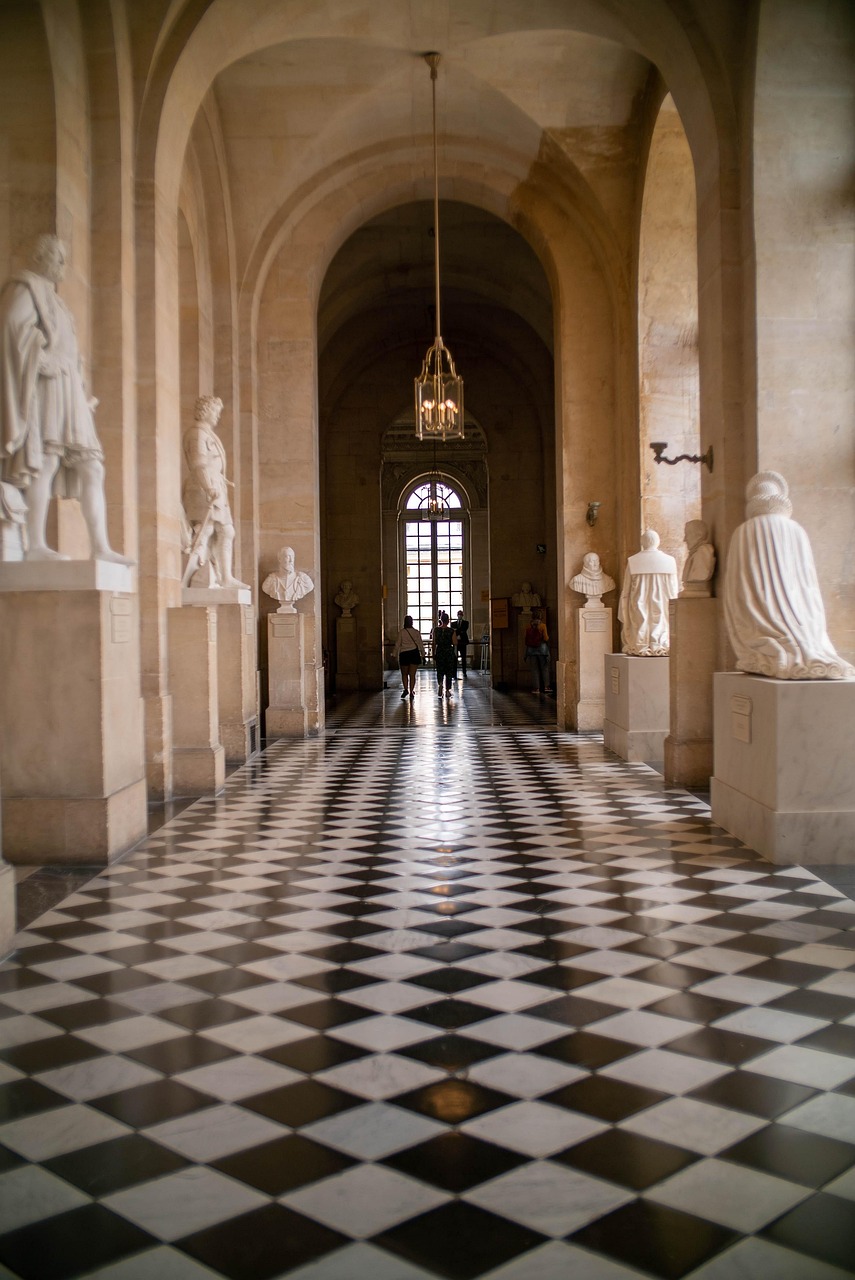
The most effective hallway plans protect both movement and sightline. When possible, avoid placing visual emphasis on the end of the corridor unless that view is carefully composed. A quieter door plane along the side walls often gives the hallway a more serene, gallery-like quality.
For readers comparing different architectural approaches, the Luxury Interior Doors blog offers more editorial ideas on how interior doors shape atmosphere, proportion, and flow.
When custom integration makes the biggest difference
Some hallways need more than a standard solution. If the space includes multiple openings, hidden storage, or a strong desire for wall-to-wall continuity, custom interior door applications can help resolve the composition more cleanly. This is where architectural thinking becomes especially valuable: the door is no longer just a passage, but part of the wall system.
DAYORIS offers custom interior door applications from DAYORIS that may be relevant when a project calls for a more integrated look. That kind of approach can be especially helpful in hallways where the design goal is quiet precision rather than visual emphasis.
If your hallway feels too narrow, start by looking at the doors before you look at the furniture or artwork. A more continuous finish, a cleaner profile, and better alignment can change the entire perception of the space. In luxury interiors, that kind of restraint is often what allows a compact corridor to feel architectural, composed, and unexpectedly open.