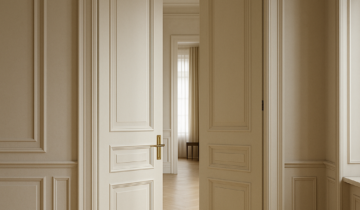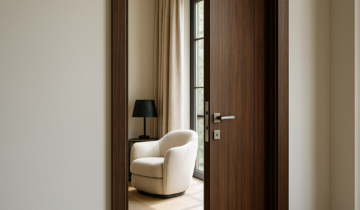
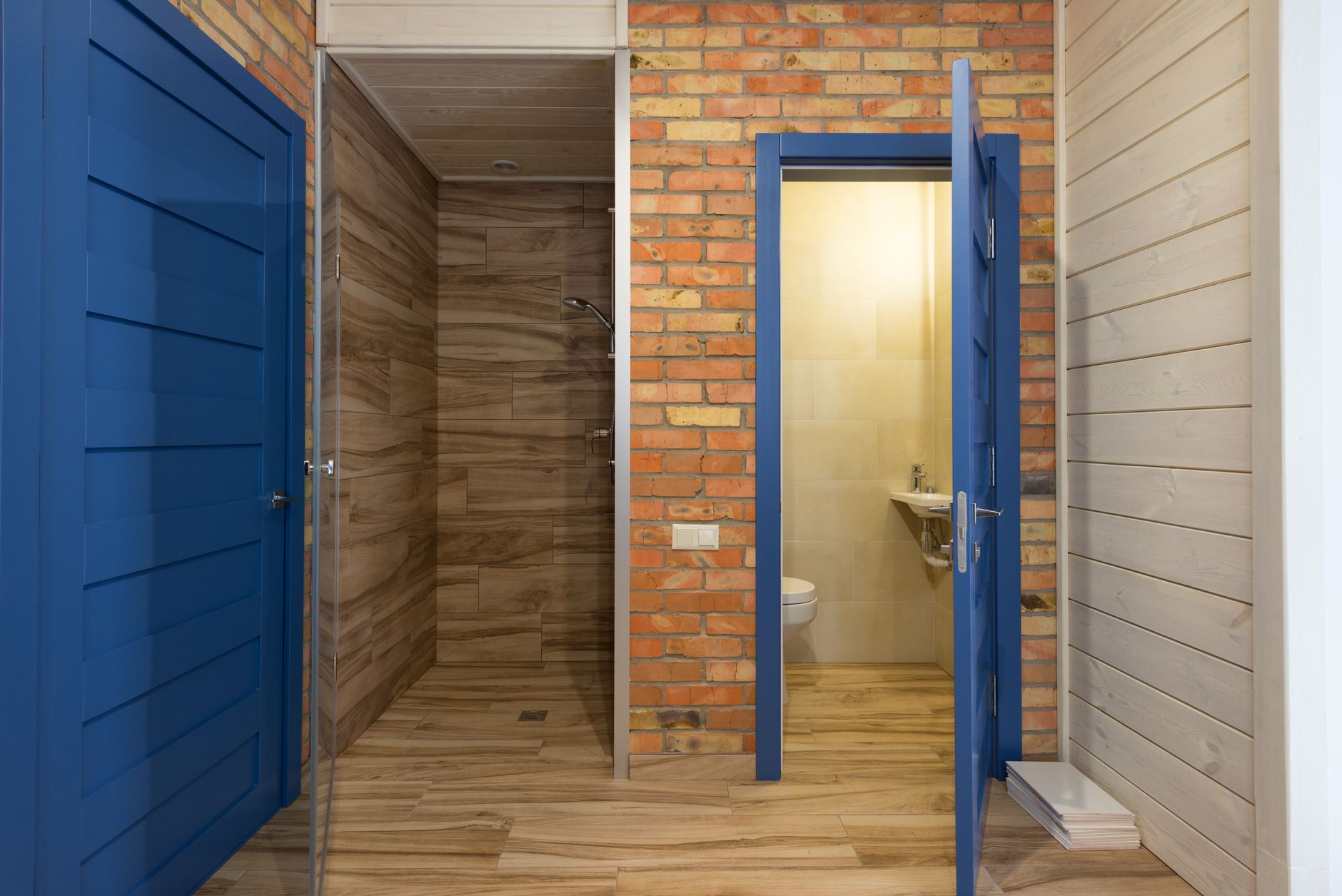
If you are designing a refined interior with travertine, limestone, oak, walnut, or other natural materials, the choice of interior door finishes for stone and wood interiors can shape the entire atmosphere of the home. Doors are not just transitions between rooms; they are large visual surfaces that either strengthen the material palette or interrupt it. In luxury architecture, that distinction matters.
When door finishes are selected carefully, they support visual continuity, sharpen proportion, and let the architecture feel calm rather than busy. When they are mismatched, even a beautiful room can feel fragmented. The best results usually come from treating the door as part of the overall envelope, not as an afterthought.
Start with the dominant material in the room
The easiest way to coordinate a door finish is to identify the surface that sets the tone. In some interiors, that may be a stone floor with strong veining. In others, it may be a wood wall, ceiling detail, or built-in millwork. Once the dominant material is clear, the door should either echo it or deliberately balance it.
For example, in a room with pale travertine and warm oak, a lightly grained wood door can maintain a soft, continuous palette. In a space anchored by dramatic stone slabs, a flush painted door in a muted tone may be the better choice because it allows the stone to remain the focal point. The key is to think in terms of material hierarchy rather than isolated finishes.
How stone changes the way a door reads
Stone often introduces movement, variation, and texture. That can be beautiful, but it also means the surrounding surfaces need discipline. If the stone has pronounced veining or tonal contrast, a door finish with too much pattern can compete visually. In that case, restrained surfaces work best: matte lacquer, softly grained veneer, or a finish that closely relates to the wall color.
More uniform stone, such as honed limestone or understated travertine, gives you more flexibility. Here, a door can introduce a subtle contrast without feeling disconnected. Bronze hardware, for instance, can bridge stone and wood beautifully because it adds warmth without overpowering the composition.
Matching warmth, not just color
One of the most common mistakes is matching a door finish only by color. In luxury interiors, undertone matters just as much. A cool white oak door can feel out of place beside creamy stone, even if the colors appear similar at first glance. Likewise, a deep walnut door may feel too heavy next to a soft, luminous limestone wall if the room lacks visual contrast elsewhere.
Look at warmth, grain direction, sheen, and surface texture together. A finish that shares the same temperature as the flooring or wall material usually feels more intentional than one that simply copies the visible color.
Choosing between wood veneer, paint, and concealed finishes
Each finish family creates a different architectural effect. Wood veneer emphasizes texture and depth. It works well when the design calls for a more tactile, grounded atmosphere. Painted finishes can soften the door into the wall plane and are often useful when you want the architecture to feel quieter. Concealed or flush door systems go even further by reducing visual interruption, especially in hallways or open-plan interiors where clean sightlines matter.
For homeowners exploring modern options, the catalog of luxury interior doors is a useful place to compare how different surfaces and profiles influence the mood of a room. In contemporary projects, the most successful door often depends less on style labels and more on how well the finish supports the broader composition.
Hardware should belong to the same material story
Door hardware is small, but it has a large visual impact. In interiors rich with stone and wood, hardware should feel integrated rather than decorative. Bronze, brushed brass, matte black, and satin nickel each communicate something different. Bronze and brass tend to reinforce warmth; matte black creates sharper contrast; softer metallic finishes usually disappear more easily into a restrained palette.
If the room already includes strong texture in flooring or cabinetry, the hardware should usually be quieter. The goal is to preserve rhythm across the interior, not to introduce another competing finish. That principle is especially important in corridors, where repeated doors can either create calm or visual noise.
Where contrast works better than matching
Not every luxury interior benefits from a perfectly matched door. In some spaces, contrast creates the most elegant result. A pale plaster wall paired with a rich walnut door can produce depth and definition. A stone-clad hallway can be lifted by a lighter painted door that reflects natural light. The trick is to keep the contrast refined and controlled.
Strong contrast works best when the architecture itself is simple. If the room already includes multiple materials, too much contrast can break the composition apart. In more minimal interiors, however, a darker door can become a grounding element that adds scale and presence without feeling heavy.
Think about sightlines and transitions
Doors are often viewed from an angle, not straight on. That means the finish should perform across changing light and movement. A glossy surface may look elegant in one room but distracting from another. A matte or low-sheen finish usually reads more consistently as you move through the home. This is one reason many designers prefer restrained surfaces in transitional zones such as hallways, gallery walls, and entry sequences.
If your project involves custom detailing or a more architectural door expression, explore DAYORIS custom interior door applications as a reference for contemporary door planning that can support a refined interior palette.
Common mistakes to avoid
One mistake is treating the door as a separate object instead of part of the room envelope. Another is choosing a finish that is visually strong on its own but unrelated to the flooring, wall treatment, or cabinetry. It is also easy to overuse texture: when stone, wood, and hardware all compete for attention, the room loses clarity.
Another issue is ignoring repeated view corridors. A door finish that looks excellent in a single room may feel too bold when seen three or four times in a row. In larger homes, consistency often matters more than novelty. A unified finish strategy helps the architecture feel composed, especially in spaces where doors appear in sequence.
For project support or selection guidance, you can also contact the Luxury Interior Doors team to discuss how different door expressions may work within your floor plan.
The most successful interiors do not force doors to compete with stone and wood; they let each material play its role. When door finishes are chosen with proportion, warmth, and visual continuity in mind, the result feels less like a collection of separate elements and more like a single architectural idea.