In luxury residential interiors, acoustic privacy is a paramount design consideration that often blends seamlessly with aesthetic quality. Creating effective sound mitigation through luxury interior doors is not only about selecting heavyweight materials but also involves architectural door systems, proportions, finishes, and integration with the interior environment.
Why Acoustic Privacy Matters in Premium Interiors
As modern home designs favor open, flowing spaces and minimalist styles, the challenge of balancing acoustic privacy with visual continuity grows. Bedrooms, home offices, and intimate living areas require doors that reduce sound transmission without compromising refined spatial perception or architectural integration.
Key Architectural Considerations for Acoustic Privacy
The effectiveness of acoustic privacy influenced by interior doors depends on several architectural factors:
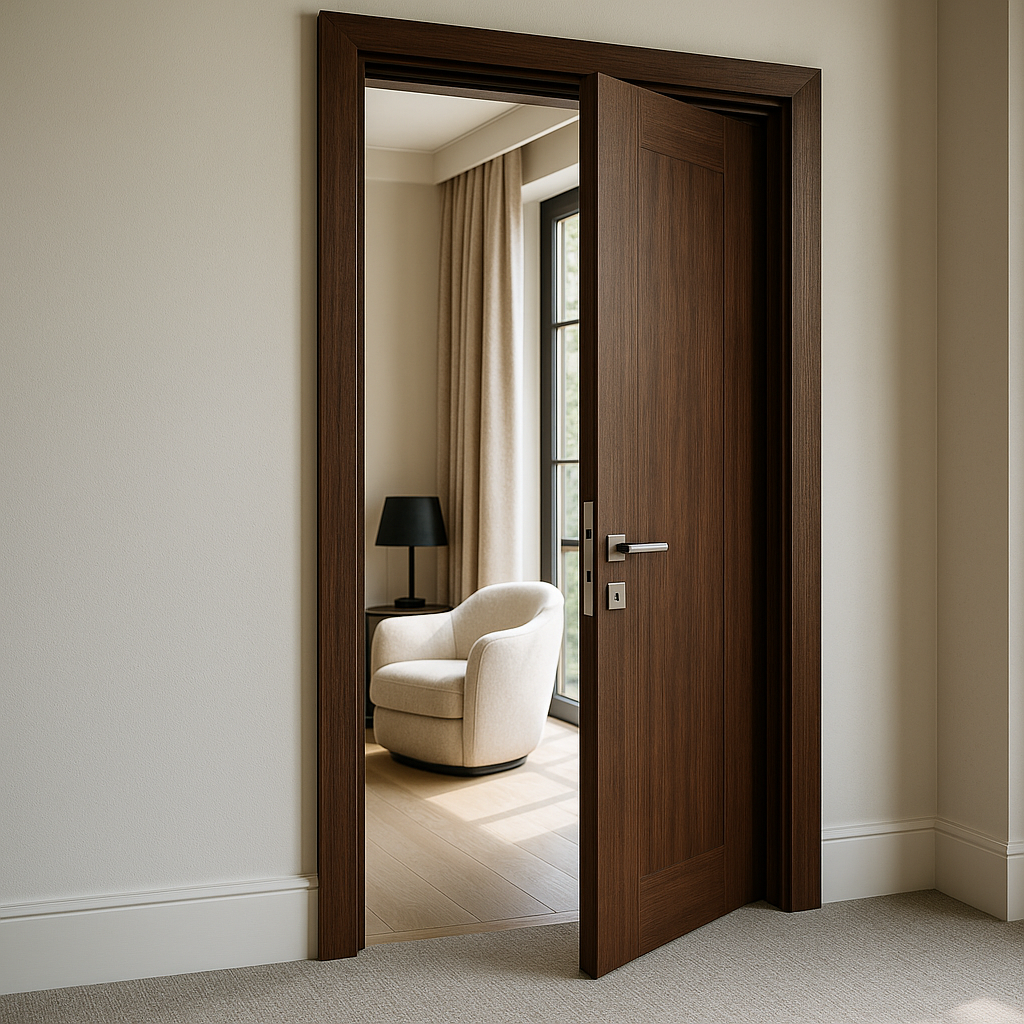
- Door Construction and Materiality: Solid core doors crafted with dense natural wood veneers, such as walnut or oak, often provide better sound attenuation than hollow-core doors. Layered wood, metal accents, or composite cores further contribute to soundproofing.
- Door Thickness and Proportion: Oversized or custom-thickness doors can improve acoustic performance. Taller or wider doors may reduce gaps, thereby limiting sound leakage when combined with appropriate hardware.
- Integration with Wall Systems: Doors that are flush or concealed within the wall plane reduce visual disruption and minimize penetrations that could allow sound to pass through, enhancing acoustic continuity between surfaces.
- Sealing and Thresholds: Acoustic performance significantly improves with properly sealed perimeters. Specialized door seals, automatic drop-down thresholds, and well-fitted jambs prevent sound infiltration.
- Spatial Context and Circulation: Positioning doors strategically within a floor plan can help in creating acoustic buffers, as well as optimizing room transitions to maintain privacy and comfort.
Material Choices and Finishes That Enhance Sound Control
Material selection plays a crucial role in acoustic privacy:
- Wood Veneers: Dense woods like walnut or oak not only offer sophistication and warmth but also inherently reduce sound transmission compared to lighter woods or synthetic materials.
- Lacquered Surfaces: High-quality lacquers can add a hard surface layer that assists in diffusing sound waves, contributing to improved acoustic properties alongside visual refinement.
- Composite and Acoustic Cores: Modern architectural door systems often feature engineered cores designed specifically for soundproofing, combining mass and absorptive properties.
- Metal Accents and Hardware: While primarily aesthetic, strategic use of metal elements like bronze or brass handles and hinges can support airtight door fitting and sealing, indirectly benefiting acoustic integrity.
Innovations in Architectural Door Systems for Soundproofing
Leading architectural door manufacturers have integrated sound control innovations into luxury interior door systems:
- Pivot and Frameless Doors: These systems offer precise fitting and specialized acoustic seals, minimizing gaps where sound could leak.
- Custom-Height and Oversized Doors: Designed to fit floor-to-ceiling or wall height openings, these door solutions reduce pressure differences that facilitate sound transmission.
- Concealed and Hidden Doors: These enhance visual continuity while enabling flush integration and specialized acoustic sealing, often incorporated at the hardware and frame levels.
- Acoustic Panels and Linings: Some luxury doors incorporate thin, invisible acoustic panels beneath veneers or finishes to significantly boost sound absorption without changing appearance.
Design Best Practices for Combining Acoustic Privacy and Luxury Aesthetics
To achieve harmony between sound control and exquisite interior design, consider the following:
- Balance Mass and Texture: Combine dense materials with textured finishes like natural wood grains or matte lacquers to diffuse sound and enhance tactile richness.
- Coordinate with Wall and Flooring Materials: Sound reflection and absorption depend on surfaces surrounding the door; complement acoustic doors with soft textiles, area rugs, or acoustic wall treatments.
- Ensure Proper Dimensioning: Proportionally sized doors that scale well with ceiling height and room size support both spatial perception and performance.
- Optimize Hardware Choice: Select architectural hardware that supports airtight closing and contributes minimally to sound gaps.
DAYORIS Architectural Door Solutions for Acoustic Privacy
Featured partner DAYORIS offers a versatile range of custom interior door applications that address acoustic privacy without sacrificing luxury. Their modern architectural door systems accommodate bespoke dimensions, premium veneer finishes, and integrated acoustic sealing technologies. These solutions provide architects and interior designers with the flexibility required for high-end residential interiors demanding both refinement and sound control.
Common Mistakes to Avoid When Designing for Acoustic Privacy
- Overlooking Door Frame Quality: Even the best door core can underperform if frames and seals are inadequate.
- Ignoring Spatial Context: Installing an acoustic door without considering adjacent surfaces and circulation may limit effectiveness.
- Compromising on Finish Durability: Select finishes that maintain their integrity over time; moisture or surface damage can affect acoustic seals.
- Neglecting Professional Assessment: Acoustic performance depends on precise integration; consulting with architects or acoustic specialists is advisable.
Conclusion
Acoustic privacy is an essential component of contemporary luxury interior door design in high-end residences. By thoughtfully selecting materials, architectural door systems, and finishes, homeowners and designers can create serene environments that marry visual elegance with functional sound control. For those seeking tailored solutions, partnering with specialized providers like DAYORIS ensures interior doors that meet the highest standards of acoustic performance and refined aesthetics.
For more insights on how to integrate acoustic privacy in luxury door design, visit our blog section or explore the catalog of premium interior doors.