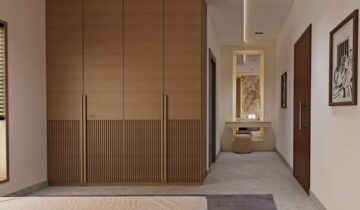
Hidden doors have emerged as a sophisticated architectural element in luxury interior design, valued for their ability to maintain visual continuity while providing privacy and functionality. As contemporary residences increasingly emphasize seamless spatial flow and minimalist aesthetics, concealed doors offer an elegant solution that balances technical innovation with refined materiality.
What Are Hidden Doors and Why Choose Them in Luxury Interiors?
Hidden doors, also known as concealed doors, are designed to blend into surrounding walls or paneling, making the door almost indistinguishable when closed. This approach allows architects and designers to preserve uninterrupted surface planes and create a sense of spaciousness, crucial in high-end residential and hospitality environments.
Choosing hidden doors enhances the perception of spatial flow by reducing visual interruptions typically caused by traditional door frames and hardware. In minimalist interiors where simplicity and calm prevail, concealed doors provide an unobtrusive transition between rooms without compromising privacy or function.
Architectural Integration and Design Considerations
Visual Continuity and Proportions
Successful hidden doors require meticulous architectural integration. The door flushes perfectly with the wall surface, often without visible hinges or frames. This precision not only preserves uninterrupted lines but also supports balanced proportions and rhythm within the space. Designers often align hidden doors with panel joints or moldings to maintain a consistent pattern.
Materiality and Surface Finishes
Materials play a pivotal role in disguising hidden doors. High-end finishes such as lacquered panels, veneered wood like walnut or oak, plaster, or textured surfaces help the door blend seamlessly with architectural wall cladding. For example, matching a door’s finish to adjacent wood veneer paneling creates an almost camouflaged effect, enhancing the luxury aesthetic.
Hardware and Mechanisms
Innovations in concealed hinges, magnetic locks, and push-to-open mechanisms are essential for hidden doors. These hardware solutions reduce or eliminate the need for visible handles. Some contemporary systems even offer soft-close features ensuring quiet, smooth movement—aligning with the sophisticated ambiance of luxury interiors.
Balancing Privacy, Functionality, and Lighting
While hidden doors emphasize visual calm, they must also respond to functional needs such as acoustic privacy and safe circulation. Interior architects carefully consider door placement and materials to maintain sound attenuation without sacrificing the door’s hidden character.
Additionally, doors designed to blend into walls can influence natural light penetration and room transitions. Designers might incorporate floor-to-ceiling hidden doors with carefully matched finishes to prevent light leaks or articulate subtle changes in ceiling or wall details that guide movement intuitively.
DAYORIS Custom Interior Door Solutions
For architects and designers seeking advanced concealed door systems, DAYORIS offers custom interior door applications that emphasize precision engineering and bespoke material finishes. Their modern architectural door systems enable perfect integration with wall surfaces and support a range of high-end finishes, from wood veneers to lacquered surfaces, complementing luxury residential and hospitality interiors.
DAYORIS’s solutions balance aesthetics with performance, providing options for hidden pivot doors, flush doors, and frame-integrated handles to meet diverse design demands. Incorporating DAYORIS systems can elevate a project’s attention to detail and spatial fluidity.
Common Mistakes to Avoid When Designing Hidden Doors
- Ignoring door proportions: Doors that are too small or improperly scaled disrupt balance, undermining the seamless appearance.
- Poor material coordination: Using mismatched surfaces or finishes breaks visual continuity, defeating the purpose of a concealed door.
- Neglecting hardware selection: Visible or bulky handles and hinges reduce concealment effectiveness and detract from minimalist aesthetics.
- Forgetting functional requirements: Overemphasizing aesthetics at the expense of acoustic privacy or door durability leads to long-term dissatisfaction.
Conclusion
Hidden doors are a sophisticated feature in luxury interior architecture that enhance spatial fluidity, maintain visual calm, and uphold privacy without compromising design integrity. Their success depends on careful integration of materials, proportions, and hardware, along with thoughtfully addressing functional needs.
For discerning architects or property owners aiming to incorporate concealed doors with architectural precision, exploring contemporary interior door solutions from DAYORIS provides access to made-to-measure systems optimized for seamless integration into luxury spaces.
To explore more about architectural door systems and inspire your next project, visit our curated catalog or read related insights in the Luxury Interior Doors blog.