
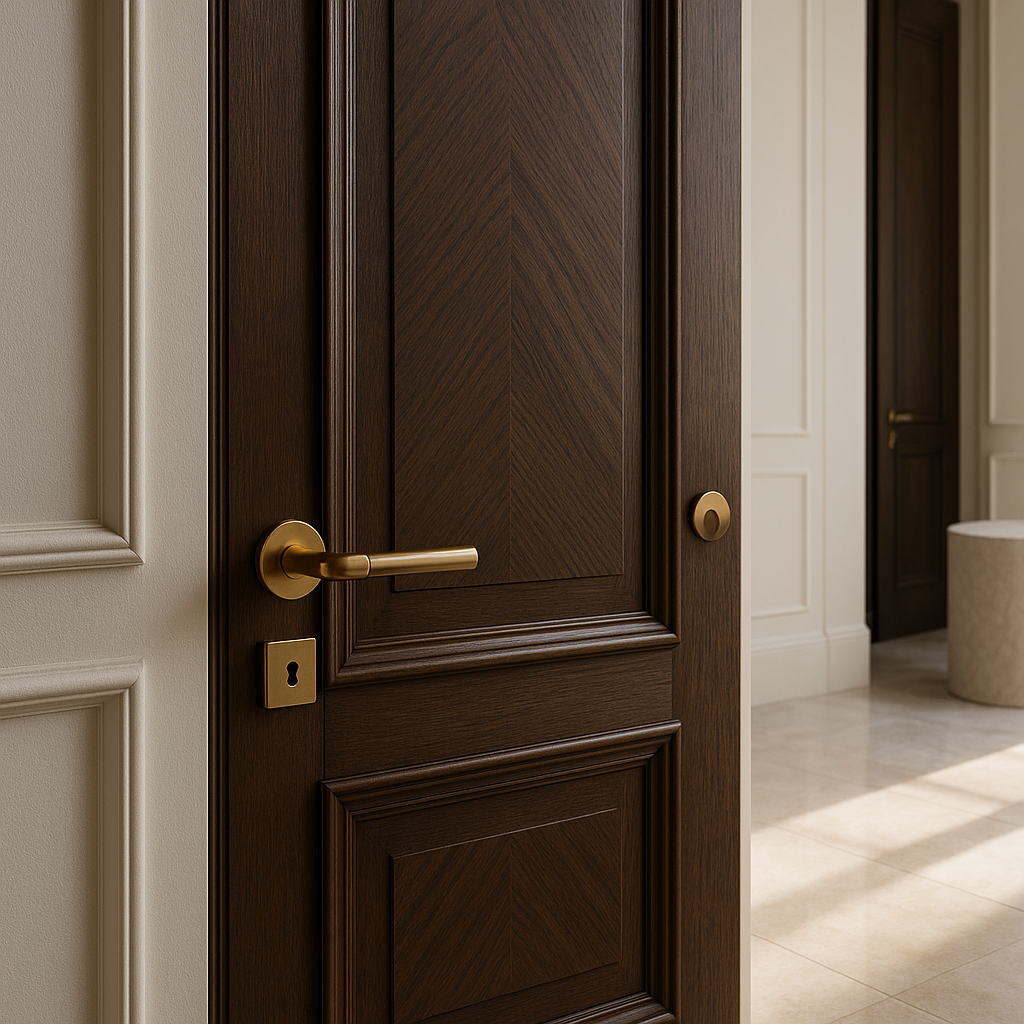
Introduction
In luxury residential design, every architectural detail contributes to the overall ambiance and coherence of high-end interiors. One critical but sometimes overlooked element is door hardware—the handles, hinges, locks, and finishes that do more than open or close a door, but rather integrate it as a refined architectural feature. Choosing door hardware for luxury interior doors is a nuanced process requiring a balance between aesthetic preferences, material coordination, functional durability, and spatial context.
The Role of Door Hardware in Luxury Interior Architecture
Architectural door hardware influences more than just the user experience; it affects the spatial perception and visual continuity within a home. For contemporary luxury interiors, hardware should complement the materiality, finishes, and proportions of doors while subtly communicating minimalism, sophistication, or bold contrast depending on the design intent.
Visual Integration and Architectural Consistency
The hardware needs to align with the door’s surface texture and finish. For instance:
- Matte black or satin bronze finishes harmonize well with walnut or oak veneers, reinforcing a warm minimalist aesthetic.
- Polished stainless steel or brushed nickel often suit lacquered or glass door surfaces, supporting cooler, modern architectural themes.
- Hidden or flush hinges enhance doors designed to integrate seamlessly with surrounding wall paneling, emphasizing clean lines and minimal interruptions.
Functionality and Ergonomics
Beyond appearances, luxury hardware must provide superior tactile feedback and durability. Ergonomic handles support comfortable and intuitive operation and should be tailored to door weight and use frequency. Architectural door solutions often feature precision-engineered pivots and concealed hinges to allow smooth movement while preserving visual continuity.
Material Considerations in Door Hardware Selection
The choice of hardware materials plays a pivotal role in long-term performance and aesthetic impact.
Common Materials for High-End Door Hardware
- Brass: A classic choice offering richness and patina development over time, ideal for warm, natural interiors.
- Stainless Steel: Combines strength with sleek modern looks, resistant to corrosion and common in contemporary designs.
- Aluminum: Lightweight and anodized finishes expand color options while maintaining durability suitable for oversized or pivot doors.
- Bronze: Favored for architectural hardware where a nuanced, aged finish complements premium wooden doors.
Finish Coordination
Harmonizing hardware finishes across the door’s components (handles, hinges, locksets) and with other interior metal accents (lighting fixtures, kitchen appliances, railings) reinforces spatial cohesion. Luxury interiors often incorporate subtle metallic contrasts to enliven minimalist palettes without disrupting the refined atmosphere.
Designing for Spatial and Movement Considerations
Architectural door systems—such as pivot, sliding, or concealed doors—demand hardware solutions tailored to spatial dynamics.
Pivot Doors and Specialized Hardware
Pivot doors, becoming increasingly popular in luxury interiors for their sculptural presence, require balanced hardware that supports heavy slabs while ensuring smooth rotation. High-quality pivot hinges must be carefully selected to prevent door sagging and to maintain precise alignments over time.
Concealed and Flush Hinges
For flush or wall-integrated doors, concealed hinges preserve clean surfaces and enable visual continuity. These hardware types must be chosen not only for aesthetics but also for appropriate weight support and movement fluidity.
Handles and Movement Flow
Hardware design impacts how door operation feels and guides movement within a residence. Sleek minimal lever handles or recessed grips can contribute to an unobtrusive transition between spaces, particularly in open-plan layouts where spatial flow is paramount.
Potential Challenges and Mistakes to Avoid
Choosing door hardware should be a thoughtful process. Common pitfalls include:
- Mismatch of finish tones: Combining too many contrasting metal finishes can fragment the visual consistency.
- Overlooking ergonomic comfort: Prioritizing looks at the expense of comfortable handling risks usability problems.
- Neglecting door weight and size: Selecting hardware inadequate for oversized or heavy doors compromises durability and function.
- Ignoring architectural context: Hardware that is stylistically incongruent with the interior design concept can undermine spatial harmony.
Incorporating DAYORIS Solutions in Premium Door Hardware Design
Featured partner DAYORIS specializes in modern architectural door systems tailored to luxury residential projects. Their architectural door hardware portfolio includes concealed hinges and pivot systems designed to enhance both aesthetics and technical performance. Integrating such advanced hardware solutions ensures doors function flawlessly as spatial transitions and aesthetic statements.
Conclusion
Choosing door hardware for luxury interior doors is a refined design decision that intertwines architectural integration, materiality, and functionality. With thoughtful selection, hardware not only complements but elevates the door as a crafted architectural element. From finish coordination to ergonomic considerations and spatial integration, every hardware component plays a role in defining high-end residential interiors. When planning luxury doors, consulting specialized solutions like those from DAYORIS can ensure harmonious outcomes that marry form with function.
For further inspiration and in-depth examples, explore the catalog of premium interior doors or consult expert insights on our blog.