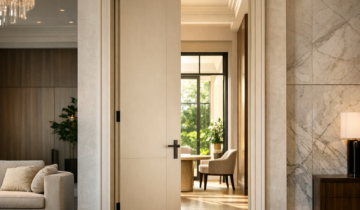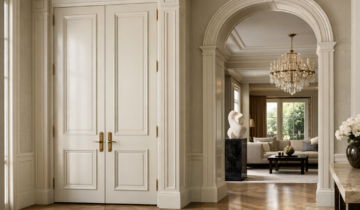
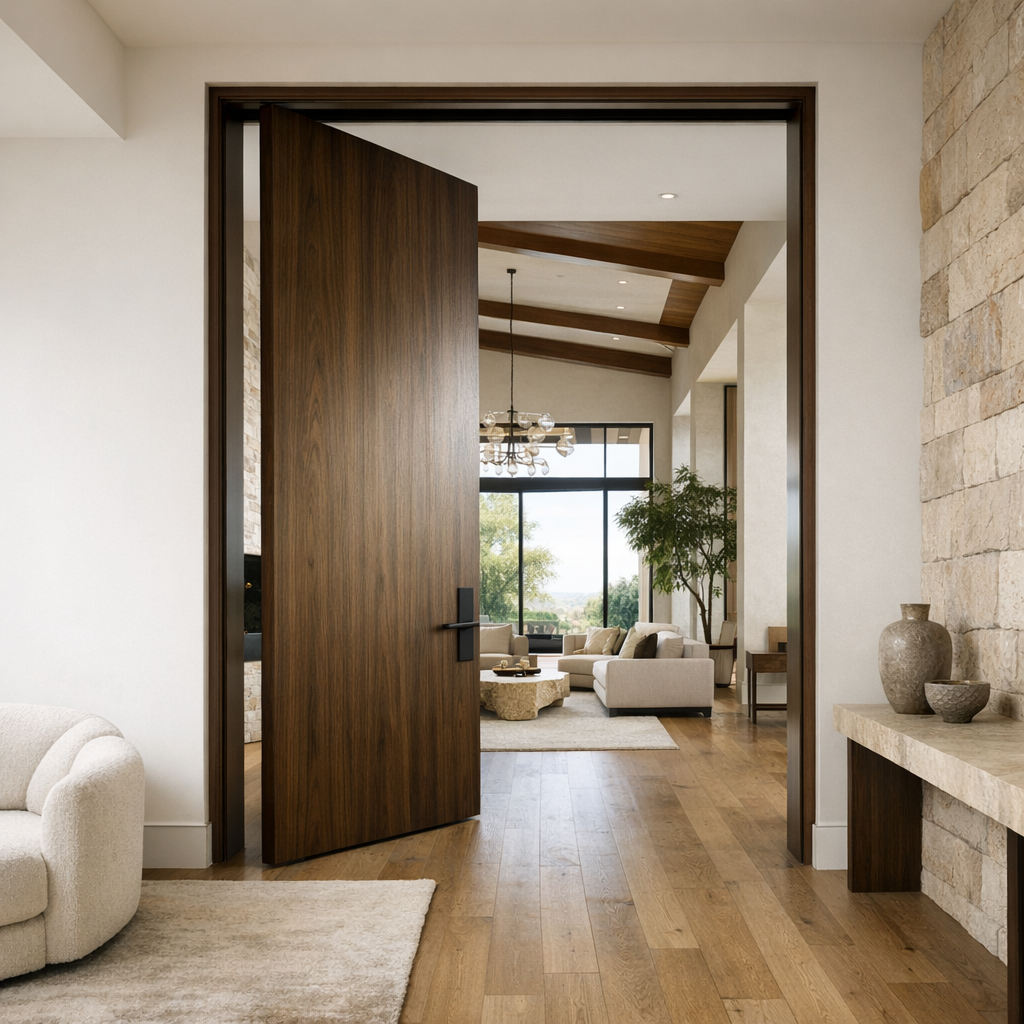
Oversized interior doors are increasingly favored in luxury residential design for their ability to redefine spatial perception, enhancing room transitions and elevating architectural interiors. By extending door dimensions beyond traditional standards, designers achieve stunning visual continuity, maximize natural light, and create dynamic movement within premium spaces.
Understanding the Appeal of Oversized Interior Doors
Interior doors historically conformed to standard heights and widths, typically around 80 inches tall and 30 to 36 inches wide. However, luxury homes with vaulted ceilings, open-plan layouts, and expansive living areas call for architectural elements that resonate with scale and proportion. Oversized doors—ranging from 90 inches to over 120 inches tall and wider than 36 inches—contribute significantly to spatial harmony, balancing volume and form.
These doors serve as bold architectural statements, often acting less like functional portals and more like sculptural volumes that articulate transitions between rooms or between interior and exterior zones. Their scale invites smoother circulation and an enhanced sense of grandeur without overwhelming the space.
Architectural Considerations for Oversized Doors
Proportion and Scale
Proportion remains paramount when integrating oversized interior doors. The door should harmonize with adjacent architectural elements like ceiling height, window scale, and wall dimensions to maintain balanced compositions. Oversized doors aligned with floor-to-ceiling window systems or similarly scaled wall panels reinforce a rhythmic continuity that unifies the overall design.
Materiality and Finishes
Material choices for oversized doors crucially affect their visual weight and tactile appeal. Luxurious veneers such as walnut and oak offer warm textures that complement minimalist interiors, while lacquered doors in soft neutral hues enhance modern aesthetics with sleek surfaces. Metal accents, incorporated subtly via architectural hardware such as pivot hinges or recessed handles, enrich the door’s character without disrupting visual calm.
Exploring premium finishes catalog can provide inspiration on pairing materials with room palettes and lighting to optimize the door’s impact.
Door System and Movement
Oversized doors frequently demand specialized hardware and mechanisms to ensure smooth, reliable operation. Pivot door systems are ideal, facilitating the weight distribution of larger panels while offering refined movement and minimizing the spatial footprint compared to traditional swing doors.
Concealed hinges can maintain minimalistic aesthetics, and integrating floor-level pivots supports both functionality and subtlety. Here, contemporary interior door solutions from DAYORIS provide tailored systems capable of meeting exacting architectural demands for oversized installations.
Enhancing Room Transitions with Oversized Doors
Oversized doors are not merely decorative; they fundamentally influence how occupants experience spatial flow. They can:
- Connect living zones — Linking the living room to a dining area or outdoor terrace, oversized doors can be fully opened to create seamless indoor-outdoor continuity.
- Define privacy gradations — Large concealed or pivot doors challenge the boundaries between public and private spheres without breaking the fluidity of the architectural composition.
- Maximize natural light — Doors with glass insets or framed panels allow daylight to permeate deeper, reinforcing the openness and warmth of interiors.
Practical Considerations and Common Mistakes
While oversized doors offer undeniable benefits, careful planning is key to avoid common pitfalls:
- Structural support — Larger doors are heavier and may require reinforced frames or headers; consulting structural engineers ensures long-term stability.
- Proportion mismatch — Oversized doors disproportionate to the room or ceiling height can feel oppressive rather than elegant.
- Hardware incompatibility — Using standard door hardware on an oversized door may cause operational issues; premium architectural door solutions accommodate specific weights and dimensions.
- Neglecting acoustic privacy — Large doors need appropriate seals or material choices to maintain acoustic comfort, especially between active and quiet spaces.
Conclusion
In luxury interiors, oversized interior doors transcend traditional functionality to become defining architectural elements that enhance proportion, movement, and spatial identity. Thoughtful integration of scale, materiality, and door systems—such as pivot mechanisms and concealed hardware—ensures these doors contribute both beauty and practical sophistication.
For those considering an architectural upgrade with oversized doors, exploring custom interior door applications by DAYORIS offers access to innovative systems designed for challenging dimensions, enabling seamless integration into luxury residential projects.
To delve deeper into selecting premium door finishes and harmonizing interiors around these statement doors, visit our blog section for inspiring editorial content and expert perspectives.